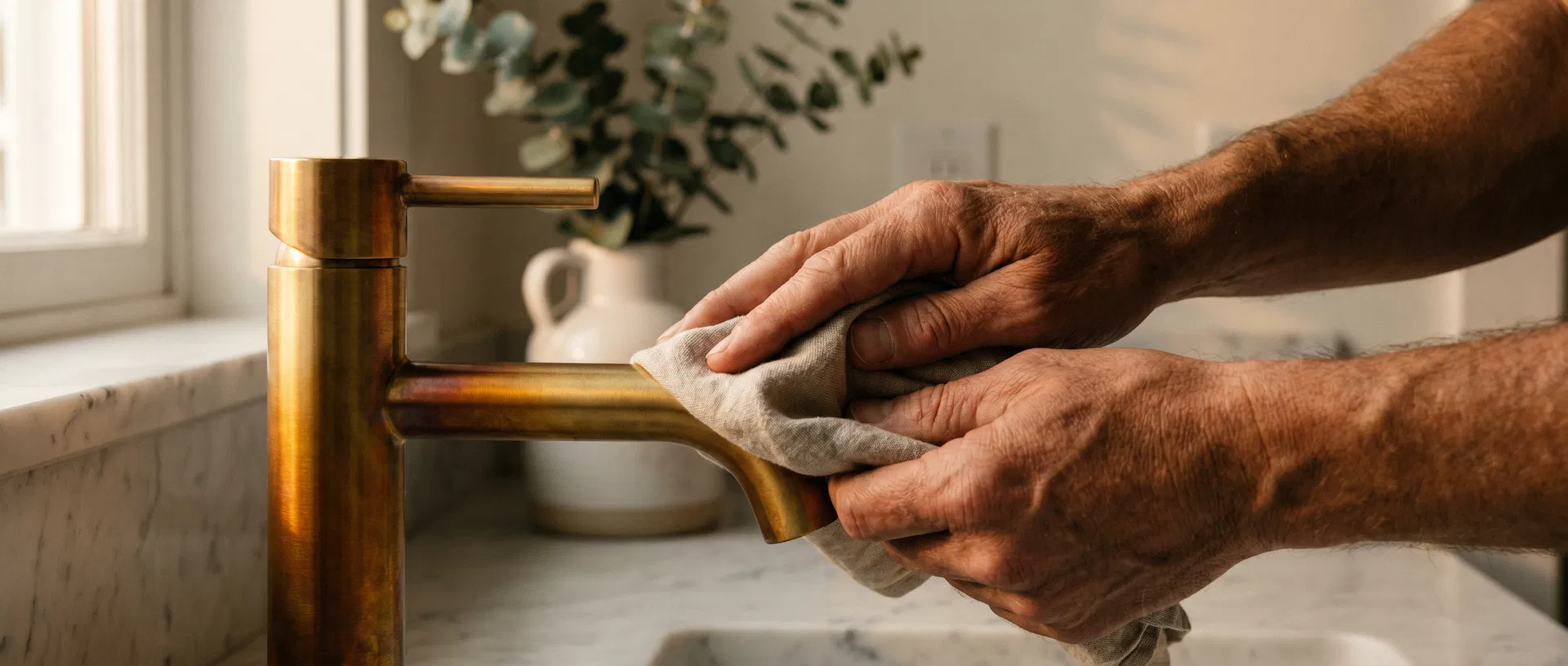
Embracing the Patina
Unlike lacquered or plated fixtures that deteriorate over time, our unlacquered brass and copper develop a patina—a natural oxidation that creates depth, warmth, and character unique to your home.
This is not a defect. It is the material expressing its history—recording the touch of hands, the minerals in your water, the humidity of your climate. No two pieces will age identically, and that is precisely the point.
We encourage you to let your fixtures evolve naturally. However, if you prefer to maintain a brighter appearance, the methods below will help you manage the patina to your preference.
The Patina Timeline
First Warmth
The bright, freshly-forged gold begins to soften. Subtle warm undertones emerge where hands touch most frequently.
Deepening Character
Rich honey and amber tones develop. The brass begins to tell its story—high-touch areas stay brighter while recesses deepen.
Full Maturity
A sophisticated, multi-tonal finish emerges. Dark chocolate in the details, warm gold on the surfaces. This is the patina that antique collectors prize.
Living Heritage
Your fixture has become a one-of-a-kind piece. The patina stabilizes into a rich, complex finish that continues to evolve subtly with the seasons.
Gentle Daily Care
The beauty of solid brass is its low-maintenance nature. For daily care, simply wipe with a soft, dry cloth after use to remove water spots.
- Wipe dry after use — prevents mineral deposits from hard water
- Use soft cloths only — microfiber or linen, never abrasive pads
- Mild soap if needed — a drop of dish soap with warm water for fingerprints
- Avoid harsh chemicals — no bleach, ammonia, or acidic cleaners
What to Avoid
Steel wool, Brillo pads, or any abrasive scrubbing material
Bleach, vinegar, lemon juice, or any acidic substance (these accelerate patina unevenly)
Lacquer, wax, or sealants—these trap moisture and cause uneven oxidation beneath the coating
Toothpaste, perfume, and cosmetics left on surfaces—these contain acids that spot-patina the brass
Restoring the Original Brightness
If you prefer to reset your patina and return to the original bright brass finish, these methods are gentle and effective. You can repeat this process as often as you like—it will not damage the solid brass.
The Natural Method
Mix equal parts flour, salt, and white vinegar into a paste. Apply with a soft cloth, let sit 10 minutes, then rinse with warm water and dry thoroughly.
Brass Polish
Use a quality brass polish such as Brasso or Bar Keepers Friend. Apply in circular motions with a soft cloth. Rinse completely and dry. Repeat for stubborn patina.
Lemon & Baking Soda
Cut a lemon in half, dip in baking soda, and gently rub the brass surface. The mild acid lifts oxidation while the soda provides gentle abrasion. Rinse and dry immediately.
Material-Specific Guidance
Brass patinas from bright gold to warm honey to deep amber-brown. It is the most forgiving material—easy to polish back to brightness and resistant to corrosion. Water spots wipe away easily when addressed promptly.
Tip: If you want to slow the patina, keep the fixture dry between uses. Moisture accelerates oxidation.
Copper develops a richer, more dramatic patina than brass—progressing from rose-gold to deep chocolate brown, and eventually developing green verdigris in humid environments. This green patina is prized in architectural applications.
Tip: For copper sinks, a thin coat of mineral oil (food-grade) after cleaning adds warmth and slows oxidation without sealing the surface.
Our nickel silver finish has a cooler, silver-white tone that patinas to a sophisticated pewter grey. It pairs beautifully with marble and cool-toned interiors. Care is identical to brass, though patina develops more slowly.
Tip: Nickel silver is naturally antimicrobial. Regular use keeps it cleaner than you might expect.
Caring for Brass & Copper Sinks
Sinks receive the most daily contact and will patina fastest. This is normal and desirable—the high-use areas develop a beautiful contrast between the polished basin and the darker edges.
Do
- Rinse after washing dishes
- Use a sink grid to prevent scratches
- Dry with a soft cloth after heavy use
- Apply mineral oil monthly for warmth
Don’t
- Leave acidic foods sitting (tomatoes, citrus)
- Use abrasive cleaners or steel wool
- Pour boiling water directly on the surface
- Let bleach or drain cleaner contact the brass
Water Quality & Your Fixtures
Your local water chemistry significantly affects how brass and copper patina. Hard water (high mineral content) leaves white calcium deposits that are easily wiped away but can accelerate patina if left to dry repeatedly.
Soft water areas will see slower, more even patina development. If you have a water softener, your fixtures will maintain their brightness longer with minimal effort.
“The patina is not damage—it is the brass recording the story of your home. Every mark, every shade, every variation is a chapter in that story.”
Frequently Asked
Will the patina affect the function of my faucet?
Absolutely not. Patina is purely cosmetic—a surface-level oxidation that does not affect the structural integrity, water flow, or mechanical operation of your fixture.
Can I have some areas patina and keep others bright?
Yes—this happens naturally. Areas you touch frequently (handles, spout tip) stay brighter from the oils in your skin. Recesses and less-touched areas darken. This contrast is part of the beauty.
Is green patina (verdigris) harmful?
Green verdigris is rare on indoor fixtures but can occur in very humid bathrooms. It is not harmful and can be easily removed with the restoration methods above. It actually protects the metal beneath.
How often should I polish my fixtures?
This is entirely personal preference. Some clients never polish and love the aged look. Others polish monthly to maintain brightness. Most find a middle ground—polishing once or twice a year to reset, then enjoying the natural evolution.
Can I speed up the patina intentionally?
Yes. Applying a thin layer of liver of sulfur solution will darken brass quickly. However, we recommend letting nature take its course—the organic patina is always more beautiful and complex than artificially accelerated aging.
Questions About Your Fixtures?
Our team of artisans and material specialists are here to help. Whether you have a question about patina, need restoration advice, or want guidance on maintaining a specific finish—we are always happy to assist.
Contact Our Team